Bone Voyage Senior Dog Care
Draft article for review. Enter hub password to continue.
That's not right. Try again.
When Is a Dog Considered a Senior? A Care Guide for the Years That Matter Most
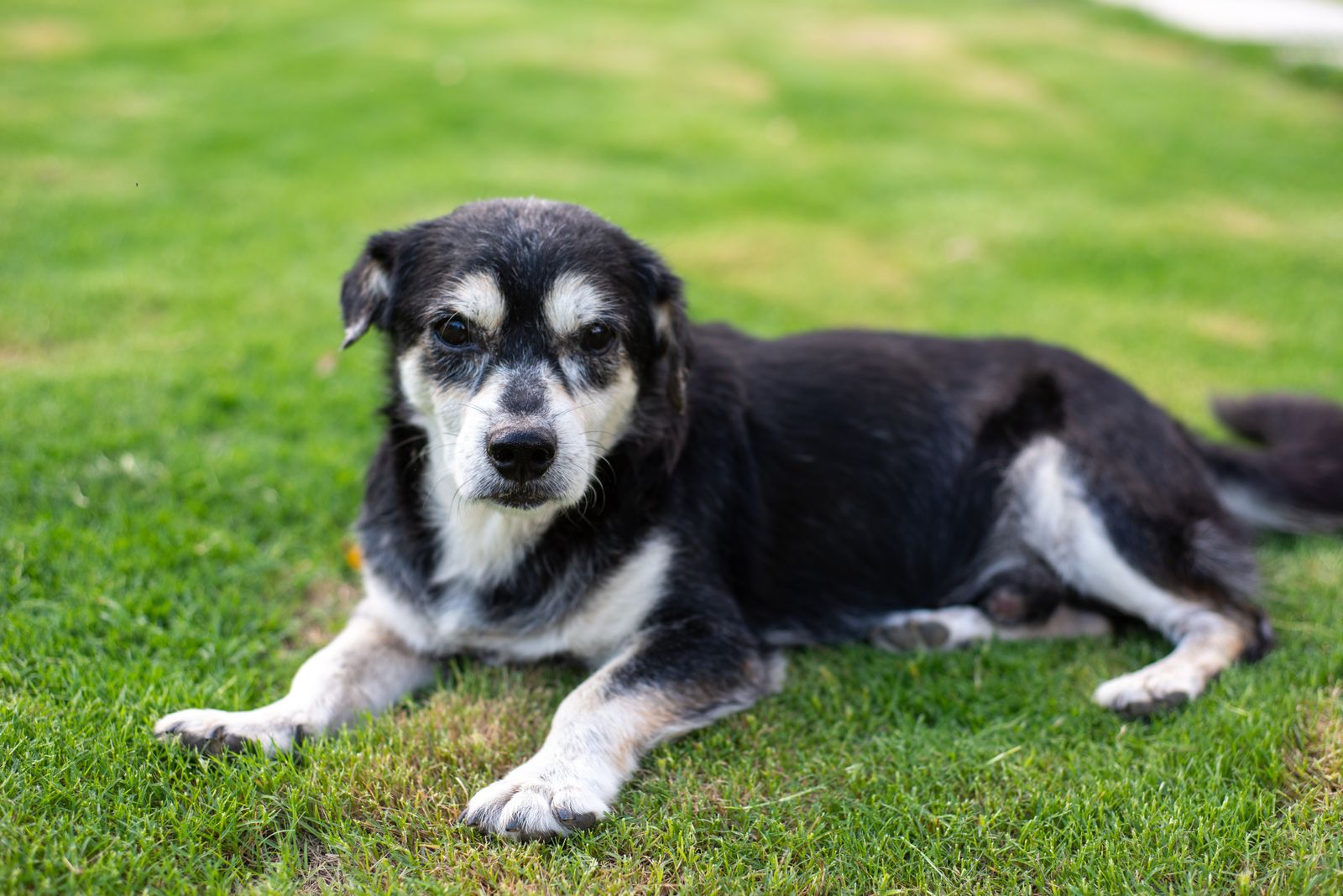
The first time it catches you is usually small.
A slower climb up the stairs. A gray muzzle that wasn't there last year. A dog who used to meet you at the door now lifting his head a half-second late, like he's deciding whether it's worth getting up.
Your dog is getting older. And it probably started before you noticed.
Here's the part most people get wrong: a dog can look young, act young, still steal socks like a puppy, and already be a senior on the inside. The number sneaks up faster than the face does.
So let's clear up the question everyone asks first, then walk through what actually changes and how you make these the best years your dog has ever had. By the end of this, you'll know exactly what to watch for, what to ignore, and the small handful of things that matter most.
🐾 When is a dog actually a senior?
Most dogs cross into "senior" in the last quarter of their expected life. For a lot of dogs, that lands right around 7 years old.
But size changes the math, and it changes it a lot.
- Large and giant breeds age fastest. They're often seniors by 6 to 7.
- Medium dogs tend to get there around 7 to 9.
- Small dogs take the longest, frequently not seniors until 8 to 10.
That size pattern isn't folklore. In a 2025 veterinary review, the senior cutoff was lower for large dogs (6 to 7 years) than for small dogs (8 to 10 years), and the canine version of dementia generally starts showing up from about 8 years of age (Vitturini et al., 2025).
The takeaway isn't a birthday. It's a shift in how you care for him. The American Animal Hospital Association suggests treating roughly the last 25 percent of a dog's expected lifespan as his senior years, which is your signal to change the routine before anything's wrong. If your dog has a complicated health history, your vet can help you decide whether to start that senior-care rhythm even earlier.
🐾 What actually changes as a dog ages
Aging isn't one thing. It's a slow stack of small ones. Here's what tends to shift, and what's normal.
The body slows down.
Muscle softens, joints stiffen, and the spring goes out of the jump. Arthritis is common in older dogs and often hides as "he just doesn't feel like the stairs anymore." Pain is easy to miss in a stoic dog, so any new limp, reluctance, or crying out deserves a call.
The senses dim.
Cloudy eyes, a little deafness, a nose that misses the treat on the floor. Most dogs adapt beautifully if you keep furniture and routines steady. Sudden blindness, red eyes, or bumping into things is different, and it's worth a vet check.
Sleep gets deeper, and sometimes stranger.
More naps is normal. Pacing at 2am, getting "stuck" in corners, or flipping day and night isn't, and it's worth a closer look (more on that below).
Weight wants to drift.
A slower metabolism plus shorter walks can pile on pounds, and extra weight is hard on aging joints and organs. The opposite, unexplained weight loss, is a flag to call the vet. Small changes are easier to fix when you catch them early.
The mind can change too.
Just like people, some dogs develop cognitive decline as they age. It's common, it's underdiagnosed, and catching it early genuinely helps.
Image placeholder: Simple, friendly infographic titled "What Changes as a Dog Ages" with five soft icons: joints, eyes/ears, sleep, weight, brain. Off-white background, pink accent.
🐾 The signs worth a vet visit (and the ones that are just age)
This is the part owners actually need, so let me make it simple.
Probably just normal aging:
- A gray muzzle and a little cloudiness in the eyes
- Sleeping more, playing in shorter bursts
- Slower on stairs, less interested in marathon walks
- Taking a moment longer to hear or respond
Call the vet, sooner rather than later:
- Drinking or peeing a lot more than usual
- Losing weight without trying
- New limping, stiffness, or crying out when touched
- Getting lost in familiar rooms, or pacing and confusion at night
- A lump that's new, growing, or changing
- Any change that's sudden, one-sided, or getting worse
The reason this matters: so many things that look like "just old age" are actually treatable. Pain, dental disease, thyroid issues, kidney changes. Your dog can't tell you, so the twice-a-year check becomes his voice.
One change scares owners more than almost any other: confusion. The dog who stares at the wall, forgets the back door, or paces all night. That one has a name, and it deserves its own conversation. Here's how to tell whether it's dog dementia or something else.
🐾 A simple senior-dog care routine
You don't need to overhaul your life. You need about six habits, held steadily.
1. See the vet twice a year. Dogs age faster than we do, so once a year leaves too long for a fast problem to grow. Two visits a year is the single highest-value thing you can do.
2. Watch the weight. Lean is kind to old joints and organs. Run your hands along his ribs once a week. You should feel them easily, like the back of your hand. If the number is moving up or down without an obvious reason, ask your vet before you simply feed more or less.
3. Protect the joints. Soft bedding, rugs over slick floors, a ramp for the car or couch. Mobility comfort is a huge quality-of-life lever for senior dogs. Don't add pain medicine from your own cabinet, even the ordinary stuff, without your vet's okay. (Here's the gear that actually helps.)
4. Mind the mouth. Dental disease is painful and common, and it quietly drags down a dog's whole health. Ask your vet about a cleaning and what you can do at home.
5. Keep the brain busy. Sniff walks, new (gentle) games, food puzzles. Mental work may help an aging mind stay engaged, and it's one of the kindest, lowest-cost habits you can build.
6. Keep the routine steady. Predictable meals, walks, and sleeping spots are comforting to a dog whose senses and memory are changing. Stability is care.
That's the whole framework. None of it is fancy. Most of it is free or close to it. The dogs who thrive in old age almost always have an owner doing these quiet, ordinary things on purpose.
Image placeholder: A printable-style "Senior Dog Care Checklist" card with the six habits as paw-bulleted lines, designed to look downloadable.
🐾 The part nobody plans for
I've spent my whole adult life around a hard, simple truth: the most vulnerable need a plan made before the crisis, not after.
In 1995 I started adoption.com, back when the internet barely existed, to connect children who needed families with families who needed children. Then I ran three orphanages, in Ethiopia, Kenya, and Haiti. I adopted seven children of my own.
The work has a name. Permanency planning. You find the people first. You match them before anyone's in an emergency, and you do the slow work of making sure it'll hold.
And here's what I can't unsee now: the years we just talked about, a dog's senior years, are exactly when he's most likely to lose his home. Not because anyone stopped loving him. Because the human who loves him got sick, or moved into care, or ran out of time, and no one had named who comes next.
So senior-dog care, the real version, is two things at once. It's the vet visits and the soft beds and the steady routine. And it's the quiet, loving act of deciding, while you're here, who would step in if you couldn't.
That second half is the whole reason Bone Voyage exists.
🐾 What I want you to take away
Your dog is going to get older. That's not the sad part. The sad part is only the years we waste worrying instead of caring.
So here's the calm version. Learn when senior starts (sooner than you think). Watch for the few signs that matter. Hold the six small habits. See the vet twice a year. And make the one plan most people never make.
Do that, and you've given your dog the best gift there is: more good years, and a plan for who'll love him if life changes.
🐾 Care for him now, and plan for him too
If your dog is heading into his senior years, start with the routine above this week. It changes everything about how he ages.
And if the bigger idea moves you, here's the next step.
- Read the mission. What happens to your dog when you can't care for him, and the plan that fixes it.
- Join the free list. Hold a place for your own dog, or become someone's backup adopter. Email and region only. No cost, no obligation. Add your name here.
Send this to someone over 50 who has a dog they adore and has never thought about these years on purpose.
Because the best senior-dog care plan is the one you make while everything's still fine, before anyone has to guess.
🐾 Quick answers
When is a dog considered a senior?
Most dogs are seniors in the last quarter of their expected lifespan, often around 7 years old. Size shifts it: large breeds around 6 to 7, small dogs frequently not until 8 to 10. A dog can look and act young and still be a senior on the inside.
What are the first signs a dog is getting old?
Usually subtle ones: sleeping more, slower to rise, a gray muzzle, cloudier eyes, less interest in long walks, a beat slower to respond. None is an emergency alone, but together they're your cue to shift into senior care.
How often should a senior dog see the vet?
Most vets recommend a wellness exam every six months for seniors instead of once a year. Dogs age fast, so twice-yearly visits catch dental disease, arthritis, kidney changes, and early cognitive decline while they're still easy to manage.
What's the difference between normal aging and a health problem?
Normal aging is gradual and even. A health problem is usually sudden, one-sided, or escalating, such as new limping, drinking much more, weight loss, or getting lost in familiar rooms. When in doubt, see the vet. Much of what looks like "just old age" is treatable when caught early.
Sources
- Vitturini, C., Cerquetella, M., & Spaterna, A. (2025). Diagnosis of Canine Cognitive Dysfunction Syndrome: A Narrative Review. Veterinary Sciences, 12(8), 781. https://doi.org/10.3390/vetsci12080781
- American Animal Hospital Association. (2023). 2023 AAHA Senior Care Guidelines for Dogs and Cats (senior defined as the last 25% of estimated lifespan; more frequent wellness exams recommended for senior pets). aaha.org/resources/2023-aaha-senior-care-guidelines-for-dogs-and-cats
🐾 Annette Thompson
Related: Dog Dementia and "Sundowning": signs, what helps, and the plan to make now →
Bone Voyage draft · Private · ← Hub