Bone Voyage Dog Dementia
Draft article for review. Enter hub password to continue.
That's not right. Try again.
Dog Dementia and "Sundowning": How to Spot the Signs, What Actually Helps, and the Plan to Make Now
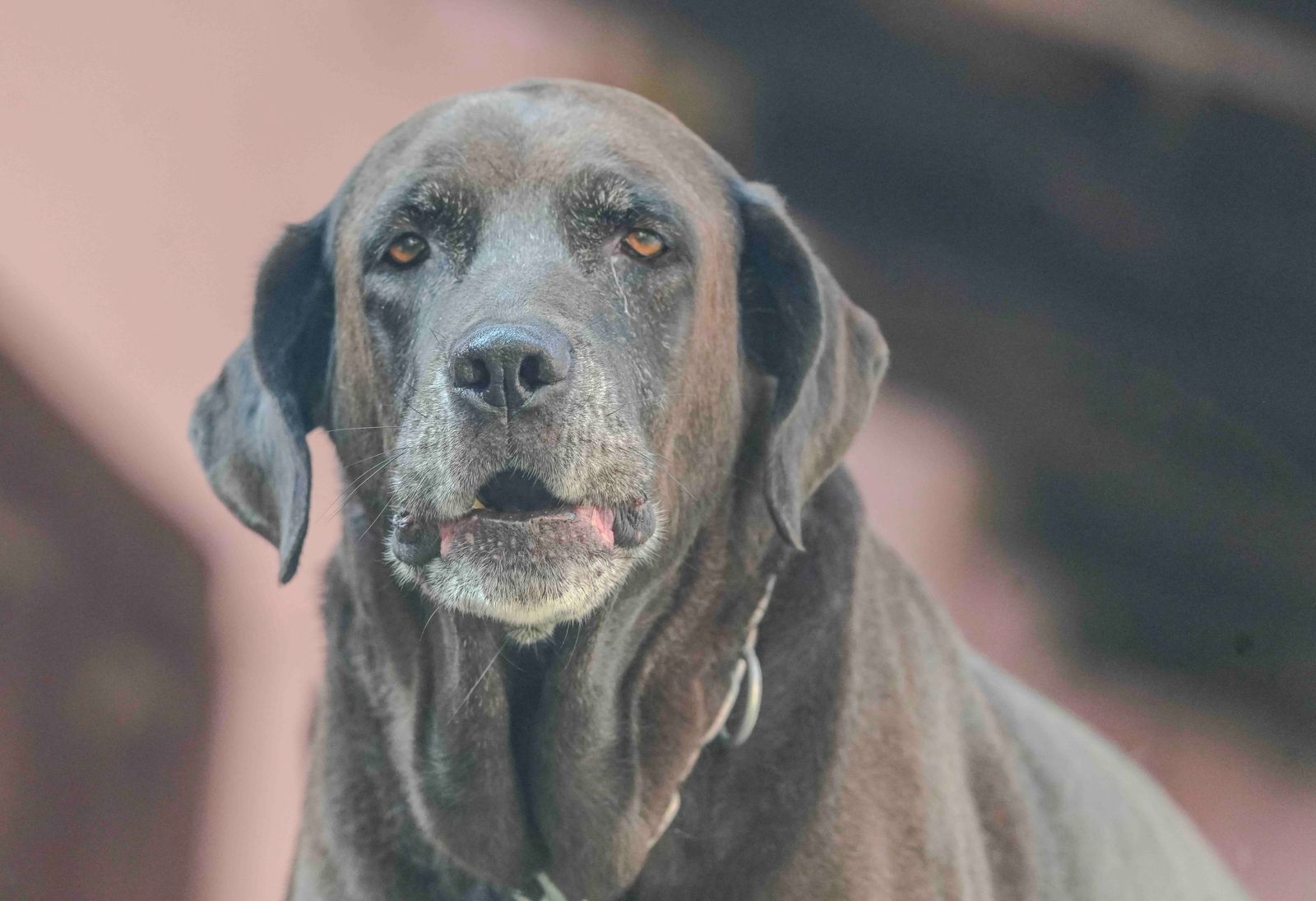
It's 2am, and your old dog is standing in the corner.
Not sleeping. Not asking to go out. Just standing, facing the wall, like he's waiting for a door that isn't there. You say his name and it takes him a second to find you. Last week he paced the hallway until dawn.
If your heart just dropped a little, you already know why you're reading this.
This pattern has a name, and a lot of science behind it. The good news is that understanding it changes everything: how you respond at 2am, what your vet can do, and how you protect your dog for whatever comes next.
Let's walk through it calmly. What it is, how to spot it, what genuinely helps, and the one thing most owners never think to do.
🐾 What dog dementia actually is
"Dog dementia" is the everyday name for canine cognitive dysfunction, or CCD. Researchers consider it the canine counterpart of Alzheimer's disease in people, with many of the same changes happening in the aging brain (Vitturini et al., 2025).
It's progressive, which means it tends to get worse over time. And it's far more common than most owners realize.
That gap (Seisdedos Benzal & Galán Rodríguez, 2016) is the heartbreak of this condition. Most dogs who have it are never identified, so their families never get the help that exists. The signs get written off as "he's just old," and a problem that may be helped goes unaddressed.
It also climbs steeply with age. One review found roughly 19 percent of dogs aged 11 to 13 are affected, rising to about 45 percent by age 15 (Vitturini et al., 2025). The earliest signs can appear as young as 7 or 8.
So if your senior dog is acting confused, you're not imagining it, and you're not alone. You're noticing something real and worth acting on. Write down what you see, when it happens, and how often. That little log can help your vet separate a slow cognitive pattern from pain, infection, vision loss, or a balance problem.
🐾 The signs: the DISHA checklist
Vets organize the signs of dog dementia under one easy-to-remember acronym, DISHA (Seisdedos Benzal & Galán Rodríguez, 2016). Read these and check the ones that sound like your dog.
- D, Disorientation. Getting lost in familiar rooms, staring at walls, standing on the wrong side of a door, or seeming "stuck" in corners.
- I, Interaction changes. Becoming more clingy and needy, or the opposite, more withdrawn and less interested in greeting you.
- S, Sleep-wake disruption. Restless, pacing, or whining at night, then sleeping heavily through the day. (This is the "sundowning" so many owners describe.)
- H, House-soiling. Accidents indoors from a dog who was reliably house-trained for years.
- A, Activity changes. Aimless wandering or pacing, repetitive behaviors, or a drop in purposeful play.
Anxiety and trouble learning new things often ride along with these. Physical signs can show up early too, like changes in vision or smell, a tremor, or swaying when walking (Ozawa et al., 2019).
If you want a quick gut-check before that visit, take the short "does my dog have dementia" quiz when it's ready. It's not a diagnosis, but it helps you walk in with the right words.
🐾 Why it gets worse at night (sundowning)
The single hardest part for most families is the nights.
As cognitive dysfunction breaks down the sleep-wake cycle, an affected dog can flip his clock: drowsy and flat all day, then wired, restless, and confused after dark. He paces. He pants. He can't settle. Sometimes he cries, and nothing you do seems to land.
Owners borrowed the word from human dementia care: sundowning. It describes that evening-and-overnight restlessness plainly, and it's one of the most recognizable signs of CCD.
It's also exhausting, and I want to say this plainly: if you're worn thin from broken nights with a confused old dog, that doesn't make you a bad owner. It makes you a tired one who's still showing up. That counts.
The nights are often what finally gets a dog to the vet. And that's actually the doorway to help. Bring notes or short videos if you can, because a tired owner trying to remember every 2am detail shouldn't have to carry the whole story from memory.
Image placeholder: Gentle "day vs night" diagram showing a dog's flipped sleep clock with cognitive decline: sleeping during daytime sun icon, pacing/restless during nighttime moon icon. Soft, warm, not clinical.
🐾 Is it dementia, or something else?
Here's something every worried owner deserves to hear: confusion in an old dog isn't always dementia. Several other things look almost identical, and some of them are very treatable.
The big one to know about is old dog vestibular disease. It's a problem with the balance system, and it tends to come on suddenly: a head tilt, circling, stumbling, or rapid flicking eye movements, sometimes overnight. It looks scary and it looks a lot like a "stroke," but many dogs improve substantially over days to weeks (Orlandi et al., 2020). The key difference: vestibular disease arrives fast, while dementia creeps in slowly over months.
Other mimics worth ruling out:
- Pain (especially arthritis) that's making a dog restless and irritable
- Vision or hearing loss that looks like disorientation
- A urinary tract infection behind sudden indoor accidents
- Thyroid, kidney, or other conditions that change behavior and energy
There's no single lab test for dog dementia. Vets reach it largely by ruling these other things out (Seisdedos Benzal & Galán Rodríguez, 2016). That's exactly why "let's just watch it" is the one approach I'd gently push back on. A real exam is how you find the treatable thing hiding underneath, and how you avoid treating dementia when something else is going on.
🐾 What actually helps
Let me be honest and careful here, because your dog deserves both.
Dog dementia can't be cured. But its progression can often be slowed, and your dog's comfort and quality of life genuinely improved, especially when you start early (Seisdedos Benzal & Galán Rodríguez, 2016). Vets generally combine three approaches.
1. Medication, guided by your vet. There are prescription options that may support cognition and ease anxiety or night restlessness for some dogs. These belong in your vet's hands, not a guess from the internet.
2. Diet and nutrition. Diet appears to matter. In one risk-factor study, dogs on controlled, nutritionally managed diets had about 2.8 times lower odds of cognitive dysfunction than dogs on uncontrolled diets (Katina et al., 2015). Some senior diets and supplements are built around brain-supporting antioxidants. Studies suggest they may help some dogs, and your vet can point you to options that fit your dog's age, medicines, kidneys, weight, and stomach. One caution: "natural" doesn't mean "safe for dogs." Plenty of natural compounds (xylitol, grapes, garlic, certain essential oils) are toxic to dogs, so never start a supplement without your vet's okay.
3. Mental enrichment and a steady routine. Keeping the brain gently busy with sniff walks, easy food puzzles, and familiar games helps an aging mind stay engaged. Just as important: keep furniture, mealtimes, and sleeping spots predictable. Stability is its own kind of medicine for a confused dog. (Comfort gear that helps, from soft bedding to night lights.)
None of this is about heroics. It's about catching it early and showing up consistently. That's within reach for most loving owners, especially when the plan is simple enough to keep on a bad week.
🐾 What this means for the years ahead
Now the part most articles skip, and the one I care about most.
A dog with dementia is the dog who needs continuity more than any other. A familiar face. A known routine. The same hands at 2am. To a confused old dog, a strange place is genuinely frightening in a way it wouldn't have been a few years ago.
Which is why this is exactly the dog you don't want landing in a shelter kennel if something happens to you.
I've spent thirty years on one question: how do you make sure the most vulnerable have a permanent place to belong before the crisis, not after? I started adoption.com in 1995, ran three orphanages, and adopted seven children. The work is called permanency planning, and it's simply this: you find the people first.
So if you're caring for a dog with dementia, do the two things together. Get him to the vet for the medical help that may fit his case. And name the person who would step in for him if you couldn't, while he can still meet them and learn their voice.
That second step is the whole reason Bone Voyage exists. A backup adopter is a real, vetted person who promises in advance to love your dog if you no longer can. For a dog whose world is already getting confusing, having that face already familiar isn't a nicety. It's mercy.
🐾 You're already doing the hard part
If you've read this far, you're the kind of owner who notices, who worries, who shows up at 2am. Your dog won the lottery the day he found you.
So here's the calm plan. Get the vet exam (rule out the treatable mimics). Start early on the three things that may help. Keep his world steady and kind. And make the one plan that keeps him covered if life changes.
That's not a sad ending. That's a loved dog, cared for all the way through.
🐾 Care for him now, and make sure he's covered
Start this week: book the vet visit, and keep his routine steady tonight. Those two things can change his nights and his odds.
Then, when you're ready:
- Read the mission. What happens to your dog when you can't care for him, and the plan that fixes it.
- Join the free list. Hold a place for your own dog, or become someone's backup adopter. Email and region only. No cost, no obligation. Add your name here.
Send this to someone whose old dog has started pacing the halls at night.
Because the dog who's losing track of the world deserves to never lose track of home.
🐾 Quick answers
What are the signs of dog dementia?
Vets use the acronym DISHA: Disorientation (getting lost, staring at walls, stuck in corners), changed Interactions (clingier or more withdrawn), Sleep-wake disruption (restless and pacing at night), House-soiling (new indoor accidents), and changed Activity (aimless pacing, less play). Anxiety and trouble learning often come too.
What is sundowning in dogs?
It's the evening and overnight restlessness common in dogs with cognitive decline. As the sleep-wake cycle breaks down, the dog paces, whines, or can't settle after dark, then sleeps heavily during the day. It's one of the most recognizable, and most exhausting, signs of canine cognitive dysfunction.
Is dog dementia the same as canine cognitive dysfunction?
Yes. "Dog dementia" is the everyday name for canine cognitive dysfunction (CCD), a progressive condition researchers consider the canine counterpart of Alzheimer's. It's common but badly underdiagnosed: studies suggest at least 14% of geriatric dogs are affected, while fewer than 2% are diagnosed.
Can dog dementia be treated or cured?
It can't be cured, but its progression can often be slowed and quality of life improved, especially with early care. Vets usually combine medication, diet changes (controlled, antioxidant-supported diets are linked to lower odds of cognitive dysfunction), and mental enrichment with a steady routine. Always start with your vet.
Is my old dog's head tilt and circling dementia or vestibular disease?
It may be vestibular disease, a balance problem that comes on suddenly (head tilt, circling, stumbling, flicking eyes) and often improves over days to weeks. Dementia develops slowly over months. Because they overlap, and pain, vision loss, or infection can mimic both, only a vet exam can tell for sure.
Sources
- Seisdedos Benzal, A., & Galán Rodríguez, A. (2016). Recent developments in Canine Cognitive Dysfunction Syndrome. Pet Behaviour Science, (1), 47-59. https://doi.org/10.21071/pbs.v0i1.3996
- Vitturini, C., Cerquetella, M., & Spaterna, A. (2025). Diagnosis of Canine Cognitive Dysfunction Syndrome: A Narrative Review. Veterinary Sciences, 12(8), 781. https://doi.org/10.3390/vetsci12080781
- Katina, S., Farbáková, J., Maďari, A., et al. (2015). Risk factors for canine cognitive dysfunction syndrome in Slovakia. Acta Veterinaria Scandinavica, 58, 17. https://doi.org/10.1186/s13028-016-0196-5
- Ozawa, M., Inoue, M., Uchida, K., et al. (2019). Physical signs of canine cognitive dysfunction. Journal of Veterinary Medical Science, 81(12), 1829-1834. https://doi.org/10.1292/jvms.19-0458
- Orlandi, R., Gutierrez-Quintana, R., Carletti, B., et al. (2020). Clinical signs, MRI findings and outcome in dogs with peripheral vestibular disease: a retrospective study. BMC Veterinary Research, 16, 159. https://doi.org/10.1186/s12917-020-02366-8
🐾 Annette Thompson
Related: When Is a Dog Considered a Senior? The full senior-dog care guide →
Bone Voyage draft · Private · ← Hub